 [Cville Dems cochair Josh Throneburg shared this account with us.]
Six weeks ago I received an unexpected invitation to the White House for a ‘Rural Communities in Action’ event. The Biden Administration wanted to feature its historic investments in rural communities across the country as well as hear from people on the ground about the work they are doing.
After clearing two separate security stations, I made it ‘on Campus’, and headed to the event.
About 100 people were invited to attend from all across the U.S. The gentleman in front of me was a county manager in rural Nevada, a young woman from Puerto Rico who was going to college on an Agricultural Scholarship was in the front row, there was a mayor from a small town in Wisconsin, and many more.
The primary speakers at the event were Secretary of Agriculture, Tom Vilsack; Michigan Senator Debbie Stabenow, who is heading up the new Farm Bill; and Secretary of Transportation, Pete Buttigieg.
Secretary Buttigieg talked at length about investments in rural America, especially infrastructure investments that benefit rural communities. Biden’s Infrastructure Bill provides for clean water, high-speed internet, new roads and bridges and much, much more. Secretary Buttigieg also noted how his office is working to remove the red tape that can make it difficult and tedious for rural entities to apply for government sponsored loans and grants.
Senator Stabenow focused her remarks on the Farm Bill. This is the third time she has led the charge to pass a farm bill and she talked both about the exciting investments that they are working on for this bill, but also about the incredible frustrations at how dysfunctional Washington is right now. She said that working on this bill has been much, much harder than before.
Finally, Secretary Vilsack masterfully painted the picture of rural decline over the last 50 years. He talked about how we have lost over 500,000 farming families in that time; how there are counties across the country that have been in persistent poverty (20%+ poverty for at least 30 years or more) and how a high majority of those counties are rural. But he not only described the problem, he inspired with the work of the Biden Administration to turn the tide. He noted how in recent years rural populations are finally beginning to grow again and how, during Biden’s first term, over 50 counties have been taken off the persistent poverty list. He described, in detail, the work that was being done to revive rural communities, and it was exhilarating.
I walked out of the White house that afternoon with lots of thoughts but one major takeaway — we have to give this Administration four more years to expand on the amazing work it is doing. I know a lot of rural residents are Republicans, and that Republicans claim to care about rural voters… but talk is cheap. It is Democratic policies around climate, infrastructure, jobs, agriculture, and much more that actually benefit rural communities. Let’s keep doing the work, and maybe do a bit better job of bragging about it along the way, so that rural voters can see the difference electing Democrats makes!
 For over a month, Virginia’s legislature and governor have been embroiled in a “two scorpions in a bottle” fight over the new biennial budget, which must be passed by June 30, 2024, to fund the government. Last Wednesday, each of them loosened the cork in the carafe. After assembly-initiated discussions with the Governor, Virginia leaders showed, for one moment at least, how the commonwealth operates differently from Washington, D.C. Rather than force Youngkin to take the political hit from vetoing the first Virginia budget in recent history, the House of Delegates used an unusual procedural move, and killed it themselves. All sides committed to producing a new budget and to return on May 15 to pass it. As Churchill once said, “Now this is not the end. It is not even the beginning of the end. But it is, perhaps, the end of the beginning.”
 The Albemarle County Democrats shared these useful links on bill tracking for the session:
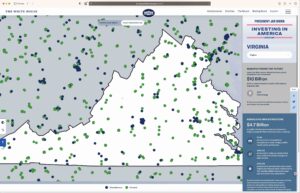 One reason the economy is doing so well (see below!) is the investment in American infrastructure from the Bipartisan Infrastructure Law, the CHIPS and Science Act, the Inflation Reduction Act, and other initiatives. The White House Tuesday launched an